Mejuri
Rated: Good
Price: $$
Location: Canada
Quick verdict
A fast-growing jewellery brand with industry-leading recycled metal content and genuinely innovative sourcing programmes. Facing a credibility challenge on labour practices. Mejuri uses 94% recycled gold, 95% recycled silver, and 100% recycled platinum, with SCS-certified net-zero lab-grown diamonds. Figures that lead the accessible jewellery market. The Salmon Gold programme, sourcing gold from restored legacy mine sites in Alaska and the Yukon while rehabilitating salmon habitats, is uniquely innovative. However,
Key info
- Headquarters
- Toronto, Canada
- Founded
- 2015
- Product categories
- Accessories
- Price range
- $$
- Key certifications
- Positive Luxury Butterfly Mark, SCS Global Services certified (lab-grown diamonds. Net-zero and 100% traceable), SBTi-validated near-term emissions target (February 2025). Suppliers are primarily RJC (Responsible Jewellery Council) certified. Natural diamonds follow Kimberley Process and OECD Due Diligence framework. Not B Corp certified.
Mejuri sustainability rating
Our ratings are based on a scale from 1 (We Avoid) to 5 (Excellent). How we rate
Rating breakdown
94% recycled gold (up from ~80% in 2022), 95% recycled silver, 100% recycled platinum. Lab-grown diamonds are SCS-certified as net-zero and 100% traceable. Salmon Gold programme sources gold from restored legacy mine sites while rehabilitating salmon habitats. Natural diamonds are 94% traceable to origin, gemstones 92%. Self-reported percentages are the main limitation.
No evidence of living wages, no financial security for suppliers, no diversity and inclusion evidence in the supply chain, and no safety incident reporting. Supplier Code of Conduct only recently made public and described as "vague" by independent analysts. Manufacturing spans seven countries with no published factory names or audit results.
SBTi-validated near-term emissions target (February 2025), Scope 1-2-3 tracking (98.5% of emissions are Scope 3), and a goal to be climate positive by 2030. New 2025 packaging is fully recyclable, FSC-certified, and 70% recycled content. However, no take-back or circularity programme exists. Only two suppliers have converted to solar.
Strong relative to the jewellery industry: annual sustainability report (first in 2024), public Supplier Code of Conduct, country-level supplier map, material traceability percentages, and GHG emissions tracking. Positive Luxury Butterfly Mark. However, no factory names published, no social audit results shared, and recycled content figures are self-reported.
Salmon Gold programme ($1.5M committed) is genuinely novel. Re-mining abandoned sites in Alaska/Yukon while restoring fish habitats, producing 10.5 kg of traceable gold in 2024. SCS-certified net-zero lab-grown diamonds. However, no consumer-facing take-back, recycling, or resale programme exists. Extend Protection Plan (January 2026) is a start but limited.
What they do well
- 94% recycled gold at scale—a concrete, measurable figure that leads the accessible jewellery market, with clear upward trajectory from approximately 80% in 2022
- Salmon Gold programme is genuinely novel. The $1.5M partnership sources gold from restored legacy mine sites in Alaska and the Yukon while rehabilitating salmon habitats, with 33.5 acres and 1,650 metres of stream restored
- SCS-certified lab-grown diamonds. Independently verified as net-zero and 100% traceable, not just brand claims
- Rapid transparency improvement. From no public sustainability information pre-2022 to an annual report, SBTi validation, Butterfly Mark, and supplier mapping within three years
- Democratised fine jewellery pricing. Most pieces $50-$500 in genuine 14k gold and sterling silver, making sustainable options accessible through a DTC model that eliminates retail markup
Room for improvement
- Labour practices rated "Not Good Enough": no evidence of living wages, no published factory names or audit results, and vague supplier code language across manufacturing in seven countries
- Recycled metal claims lack independent verification. The 94% recycled gold figure is self-reported internal data; while the Butterfly Mark provides some validation, no specific recycled content certification exists for the metals themselves
- No circularity infrastructure. No take-back programme, no jewellery recycling, and no resale platform; competitors are further ahead on circular models
About Mejuri
Mejuri was co-founded in January 2015 by Noura Sakkijha, a third-generation Jordanian jeweller and trained engineer, and her husband Majed Masad. Frustrated that the jewellery industry marketed primarily to men buying for women, Sakkijha flipped the narrative: roughly 75% of Mejuri purchases are self-purchases by women. The tagline "buy jewellery for your damn self" became a cultural touchstone. Growth was rapid. Revenue quadrupled annually from 2015 to 2018, fuelled by social media savvy and a DTC model that cut traditional retail markups.
The brand has raised over $100M in venture funding (including a $23M Series B led by NEA in 2019, with participation from Net-a-Porter's Natalie Massenet) and expanded to 29+ stores across the US, Canada, UK, and Australia, serving roughly 2 million annual customers with approximately 600 employees (77% women). Profitability has not yet been achieved but is described as progressing quarterly.
Materials are the sustainability centrepiece. The brand uses 94% recycled gold (up from approximately 80% in 2022), 95% recycled silver, and 100% recycled platinum. Lab-grown diamonds are SCS Global Services certified as net-zero and 100% traceable. The most innovative programme is Salmon Gold ($1.5M committed), which sources gold from restored legacy mine sites in Alaska and the Yukon while rehabilitating salmon habitats: 33.5 acres of habitat and 1,650 metres of stream restored, producing 10.5 kg of traceable gold in 2024 (enough for 8,000+ pieces).
The labour story is more complicated. Manufacturing spans seven countries: Germany, Italy, Turkey, India, Thailand, China, and Vietnam. With primarily RJC-certified suppliers but no published factory names or independent audit results. This creates a notable tension with the brand's empowerment-focused marketing. The $1M+ Empowerment Fund (scholarships and advocacy since 2020) is positive but doesn't address core supply chain gaps.
Product highlights
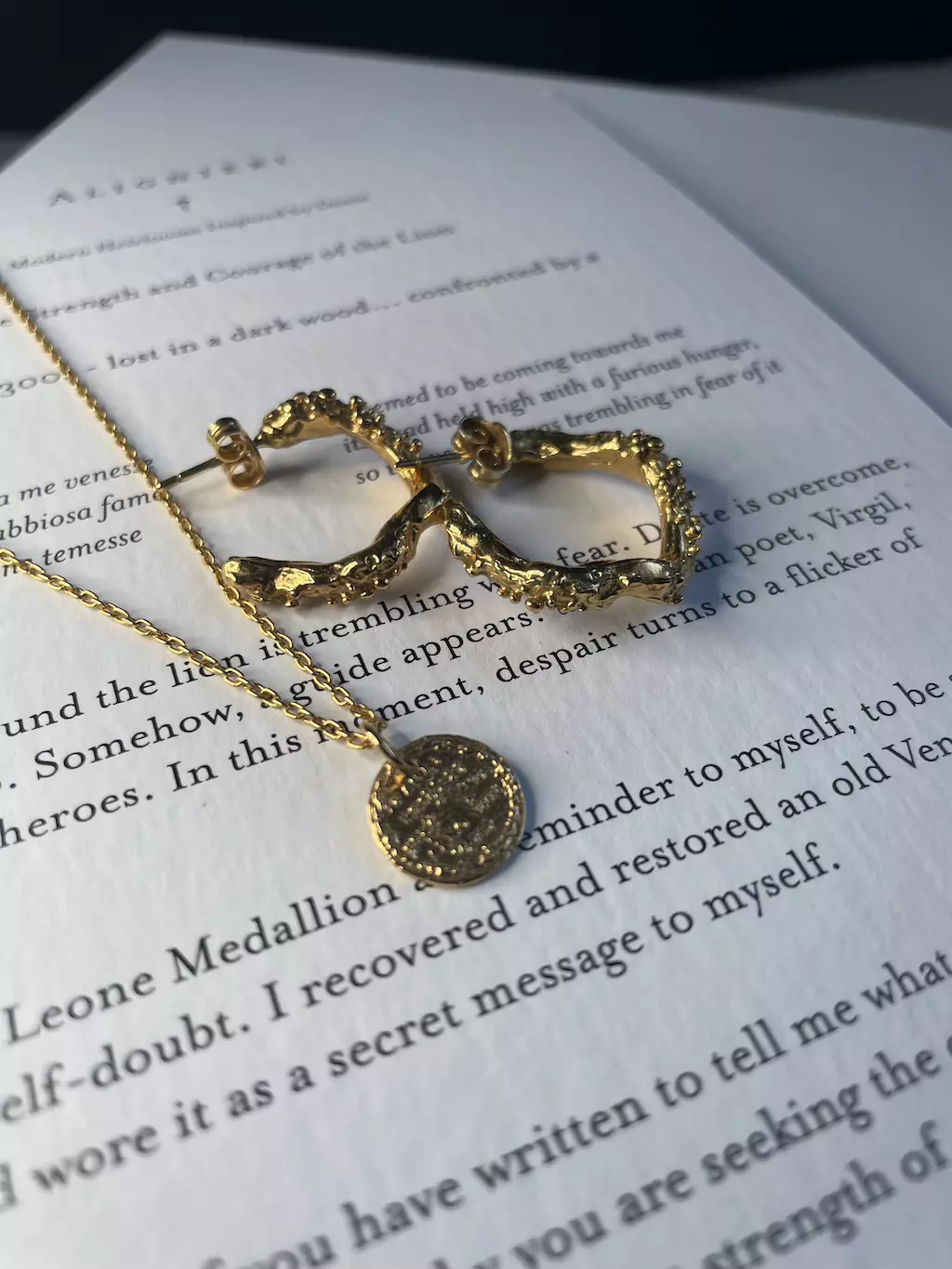
Croissant Dome Hoops
Textured croissant-inspired hoops available in vermeil or 14k gold, the brand's signature design and social media phenomenon.
$68–$398
Mejuri's most iconic design. The Pave Diamond version features responsibly sourced diamonds in 94% recycled 14k gold.
Lab Grown Diamond Solo Ring
Minimalist bezel-set lab-grown diamond in 14k gold, SCS-certified as net-zero.
~$298
Exemplifies accessible sustainable fine jewellery. Independently certified net-zero diamond in recycled gold at an entry price for diamond jewellery.
Bold Huggie Hoops
Everyday 14k solid gold huggies designed for daily and sleep wear in 94% recycled gold.
~$198
A bestselling staple: Mejuri estimates the market equivalent at approximately $450, making the DTC value proposition tangible.
Salmon Gold Collection
Rings and earrings crafted from regeneratively sourced Alaskan gold that actively restores salmon habitats.
Various
The brand's most innovative sustainability story. Traceable gold from the $1.5M habitat restoration partnership.