Rothy's
Rated: Good
Price: $$$
Location: USA
Quick verdict
A genuine material innovator with real recycling achievements: 225 million bottles repurposed and a zero-waste factory, Undermined by significant transparency failures and poor customer experience. Rothy's pioneered 3D knitting shoes from recycled plastic bottles, owns a LEED Gold factory with TRUE Platinum Zero-Waste certification, and has created less than 1% upper material waste. But the brand missed its 2023 carbon neutrality goal with no public update, publishes no emissions data or sustainability report, holds a BBB D- rating for failing to respond to complaints, and carries a 2.0/5 Trustpilot score with 74% one-star reviews A $1 billion valuation and $211M in 2024 revenue make this a major player with resources to do better on transparency.
Key info
- Headquarters
- San Francisco, California, USA
- Founded
- 2012 (products launched 2016)
- Product categories
- Shoes, Accessories
- Price range
- $$$
- Key certifications
- LEED Gold (factory), LEED Platinum (offices), TRUE Platinum Zero-Waste (factory), SCS Recycled Content Certified (100% post-consumer rPET), Responsible Wool Standard (RWS), OceanCycle Certified (marine plastic in bags), San Francisco Green Business. Not certified: B Corp, Climate Neutral, OEKO-TEX, bluesign, SA8000, WRAP, BSCI.
Rothy's sustainability rating
Our ratings are based on a scale from 1 (We Avoid) to 5 (Excellent). How we rate
Rating breakdown
100% post-consumer recycled PET averaging 6 bottles per pair; 225M+ bottles repurposed total. 3D knitting creates less than 1% upper waste vs 25-50% in traditional manufacturing. Also uses natural hemp, RWS merino wool, algae-based foam, and OceanCycle-certified marine plastic (700,000+ lbs diverted). Recycled PET does shed microplastics during washing.
Despite owning its factory (450+ employees in Dongguan, China), the brand does not publish wage data, living wage benchmarks, or percentage of supply chain audited. No SA8000, WRAP, or BSCI certifications, Code of Conduct exists but is not publicly downloadable. Did not disclose adequate COVID-19 worker protection policies.
LEED Gold factory with TRUE Platinum Zero-Waste certification is genuinely impressive. 100% plastic-free packaging saving 3.3M+ lbs of cardboard. Take-back programme has recycled 20,000+ pairs. However, missed 2023 carbon neutrality goal with no update, no Scope 1/2/3 emissions disclosure, no Science-Based Targets, no annual sustainability report.
Does not publish a sustainability report, emissions data, or supplier list. Missed carbon neutrality deadline with no public explanation. BBB D- rating for failing to respond to 18 complaints. 2.0/5 Trustpilot with 74% one-star reviews. A Duke Law School paper examined the brand in the context of fashion greenwashing.
3D knitting technology is genuinely innovative with under 1% waste. Take-back programme recycles uppers into new yarn, soles into carpet backing/insulation/flooring. OceanCycle marine plastic in bags. Shipping box doubles as shoe box. However, microplastics shedding from recycled PET is an inherent limitation the brand acknowledges by selling wash bags.
What they do well
- Genuine material innovation: 3D knitting from 100% post-consumer recycled PET creates less than 1% upper material waste, compared to 25-50% in traditional cut-and-sew manufacturing
- Massive recycling scale. Over 225 million plastic bottles repurposed and 700,000+ lbs of marine plastic diverted through OceanCycle-certified bags
- Industry-leading factory certifications. Company-owned factory holds LEED Gold, TRUE Platinum Zero-Waste, and SCS Recycled Content certifications
- Working circular model. Take-back programme accepts used shoes at all 20+ retail stores, recycling uppers into new yarn and soles into carpet backing, insulation, and athletic flooring
Room for improvement
- Missed carbon neutrality with no accountability. Set a 2023 carbon neutral goal, failed to achieve it, and has provided no public update or revised timeline despite having $211M in annual revenue
- Labour transparency gap. Despite owning a 450+ employee factory in China, does not publish wage data, living wage benchmarks, or supply chain audit percentages; holds no labour certifications (SA8000, WRAP, BSCI)
About Rothy's
Rothy's was founded in 2012 by Stephen Hawthornthwaite (investment banker) and Roth Martin (art dealer) but didn't launch products until 2016 after four years of R&D developing their signature 3D knitting technology. The concept is elegant: recycled plastic bottles are transformed into thread, then knitted directly into shoe uppers with less than 1% material waste. By October 2025, the brand had repurposed over 225 million bottles. Brazilian footwear giant Alpargatas (owner of Havaianas) acquired a 49.9% stake in December 2021 for approximately $475 million, valuing the company at $1 billion.
The factory credentials are genuinely impressive. Rothy's owns a 250,000+ square foot factory in Dongguan, China, with 450+ employees and 260+ knitting machines. The facility holds LEED Gold certification, TRUE Platinum Zero-Waste certification (achieved 2023), and SCS Recycled Content verification confirming 100% post-consumer recycled PET. The company also operates a take-back programme launched in March 2021, accepting returned shoes at all 20+ retail stores. Uppers are recycled into new yarn while soles are ground for carpet backing, insulation, or athletic flooring. Over 20,000 pairs have been recycled.
However, the brand's transparency record tells a different story. Rothy's set a goal for carbon neutrality by 2023 but there is no evidence this was achieved, and no updated timeline has been published. The brand does not disclose Scope 1, 2, or 3 greenhouse gas emissions, has no Science-Based Targets, and publishes no annual sustainability report, Surprising for a billion-dollar company positioning itself on sustainability. A Duke Law School academic paper examined Rothy's in the context of fashion greenwashing, noting claims about carbon neutrality and circularity needed more substantiation. PETA actively campaigns against the brand for incorporating merino wool.
Customer experience is the brand's Achilles heel. The Better Business Bureau rates Rothy's D- for failing to respond to 18 complaints. Trustpilot shows a 2.0/5 rating with 74% one-star reviews. The company has claimed its profile but has not replied to negative reviews. Complaints centre on unresponsive customer service, rigid return policies (especially for final sale items), sizing issues, sole durability problems, odour retention, and shrinkage after washing. The brand charges a $7.99 fee for mail-in refunds and offers no warranty or repair services. Revenue reached $211M in 2024 (up 17% year-on-year) with 3 million total customers, suggesting the product has appeal despite service issues.
Product highlights
The Point Flat
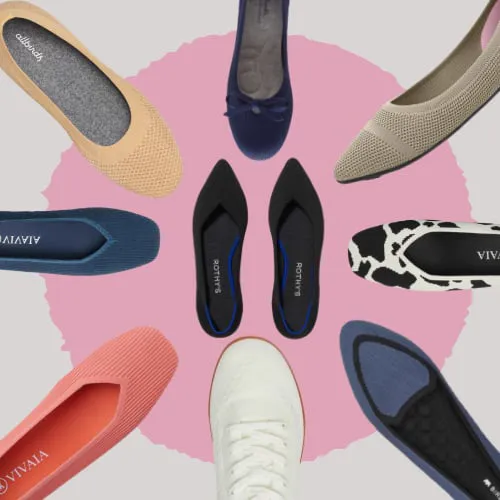
The brand's signature pointed-toe flat, 3D-knitted from recycled plastic bottles with a washable, slip-on design.
$99–$155
The original Rothy's shoe that launched the brand. Each pair repurposes approximately 6 plastic bottles with less than 1% knitting waste.
The Sneaker
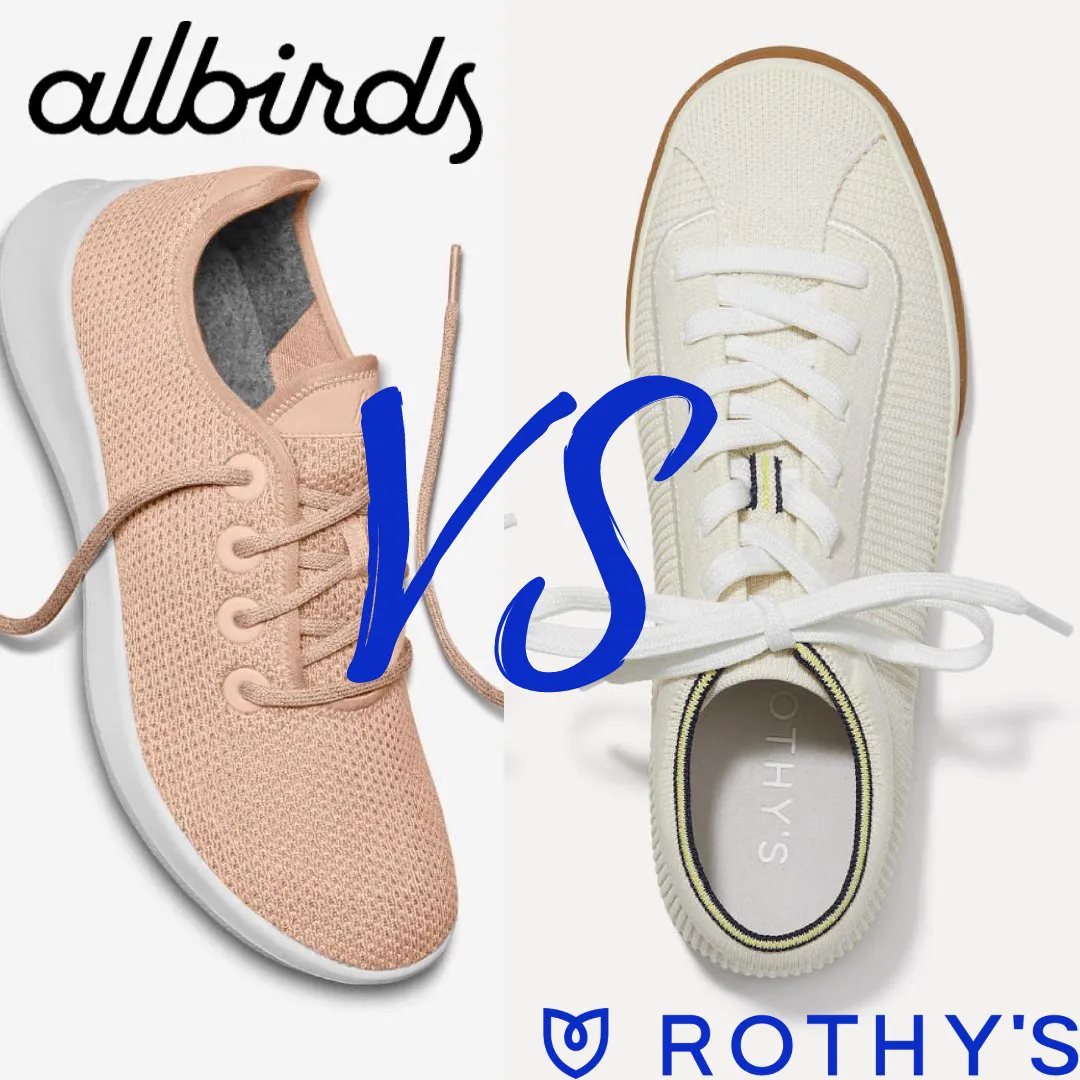
Casual sneaker knitted from recycled PET with algae-based foam insoles and rubber outsoles.
$99–$179
Extends the recycled bottle technology into an everyday silhouette, featuring proprietary algae-based foam that pulls algae from waterways.
The Bag Collection
Totes and accessories made from OceanCycle-certified marine plastic diverted from waterways and coastlines.
Varies
Over 700,000 lbs of marine plastic diverted through this line, with OceanCycle certification verifying the ocean-bound plastic sourcing.
The Mary Jane
Classic Mary Jane silhouette in recycled PET with an adjustable strap, machine washable.
$159–$165
Celebrity favourite worn by Meghan Markle and Katie Holmes. Demonstrates the range of styles achievable with 3D knitting technology.
![Birdies vs Rothy's: Which Flats Are Worth Your Money? [2025]](/images/blog/birdies-vs-rothys.webp)