
Mahabis
Rated: Good
Price: $$
Location: UK
Quick verdict
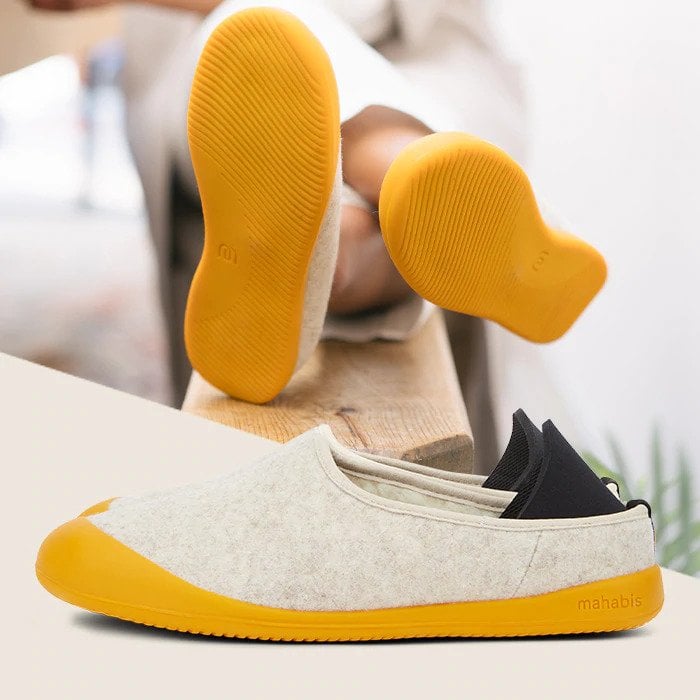
A revived UK slipper brand with genuine material innovation in its Curve range. But inconsistent sustainability across product lines and near-zero transparency. Mahabis' ReWooly recycled wool felt (50%+ recycled fibres developed with an Italian mill) and EcoCert-certified organic, non-mulesed wool lining are real differentiators in a category dominated by synthetics. The First Mile recycling scheme lets UK customers return old slippers for free. However, the flagship Classic line still uses a polyester blend with a synthetic TPU sole, meaning the brand's most visible product is its least sustainable. No third-party certifications beyond EcoCert, no published sustainability report, and no factory or supply chain disclosure after a 2019 relaunch following administration.
Key info
- Headquarters
- London, UK
- Founded
- 2014
- Product categories
- Shoes, Slippers
- Price range
- $$
- Key certifications
- EcoCert (organic wool lining). FSC-certified packaging. No B Corp, Fair Trade, GOTS, OEKO-TEX, or other major third-party certifications.
Mahabis sustainability rating
Our ratings are based on a scale from 1 (We Avoid) to 5 (Excellent). How we rate
Rating breakdown
The Curve and Mule lines use ReWooly recycled wool felt (50%+ recycled fibres) and EcoCert-certified organic, non-mulesed Italian wool lining. Pura-Latex natural rubber sole replaces synthetic TPU. However, the flagship Classic uses a 61% wool / 39% polyester blend with synthetic TPU sole. The most visible product is the least sustainable.
Manufacturing in Portugal benefits from EU labour protections, a meaningful upgrade from pre-administration China production. However, no Fair Trade, SA8000, or other labour certifications. No factory list, no supplier code of conduct published, and no third-party audits disclosed.
Partners with Ecologi (203+ tonnes CO2 offset, 26,500+ trees planted), plants one tree per pair sold, and uses 100% recyclable, FSC-certified packaging from recycled materials. First Mile recycling scheme lets UK customers return old slippers for free. No water usage data or science-based targets.
Very limited. No published sustainability report, no factory list, no impact metrics beyond the public Ecologi profile. The sustainability page is brief and aspirational. Material composition is disclosed on product pages, which is a small positive.
ReWooly recycled wool felt is a proprietary innovation developed with an Italian mill. First Mile end-of-life programme accepts returned slippers for free recycling into playground surfacing and road materials, incentivised with a 15% discount. Detachable sole concept (original innovation) won Best Innovation in Footwear at 2015 Drapers Awards.
What they do well
- ReWooly recycled wool felt. Proprietary material with 50%+ recycled fibres developed with an Italian mill, a genuine differentiator in the slipper category
- End-of-life circularity programme: First Mile lets customers return any Mahabis slippers for free recycling into new materials, incentivised with a 15% discount code
- Shifted manufacturing from China to Portugal. After the 2019 acquisition, reducing transport emissions and gaining EU labour regulation protections
- Verified carbon offsetting: Ecologi partnership provides third-party trackable data with 26,500+ trees planted and climate-positive workforce status
- EcoCert-certified organic wool. Certified non-mulesed sourcing shows genuine attention to animal welfare
Room for improvement
- No major third-party certifications. No B Corp, Fair Trade, GOTS, or OEKO-TEX, while direct competitors like Allbirds and Baabuk hold B Corp status
- Sustainability varies wildly by product line. The Curve range is genuinely thoughtful, but the Classic (polyester blend, TPU sole) and Lite (entirely synthetic) don't match the brand's sustainability narrative
- Near-zero transparency. No sustainability report, no factory disclosure, no labour conditions data, and no measurable impact metrics beyond the public Ecologi profile
About Mahabis
Mahabis was founded in 2014 by entrepreneur Ankur Shah with a vision to create "the Nike of downtime." Designed in London with Scandinavian-inspired aesthetics, the brand exploded from £1.5M in year-one revenue to over £20M by year three, selling nearly a million pairs across 100+ countries. The original innovation. Detachable, colour-swappable rubber soles, Won Best Innovation in Footwear at the 2015 Drapers Awards, beating Adidas and Saucony.
That growth proved unsustainable. Heavy debt (£2.6M owed to creditors), poor Christmas 2018 trading, and Brexit-related cost pressures forced the company into administration on December 27, 2018. In January 2019, YYX Capital. A venture firm co-founded by Simba Sleep's James Cox. Acquired the assets, retained all 16 staff, and installed Iain Martin (former Moonpig MD) as CEO. The relaunched brand shifted manufacturing from China to Portugal and began developing sustainable materials.
The material innovation is genuine, particularly in the Curve range. ReWooly recycled wool felt uses 50%+ recycled fibres developed with an Italian mill, paired with EcoCert-certified organic, non-mulesed Italian wool lining and Pura-Latex natural rubber soles. Packaging is FSC-certified, 100% recycled, and recyclable. The Ecologi partnership provides verified carbon offsetting with 203+ tonnes offset and 26,500+ trees planted. The First Mile recycling scheme accepts returned slippers for free, shredding them into playground surfacing and road materials.
However, sustainability is inconsistent across the product range. The flagship Classic. The brand's most visible product. Uses a 61% wool / 39% polyester blend with a synthetic TPU sole, and the Lite is entirely synthetic. Revenue has stabilised at an estimated ~$3.8M annually, far below the pre-collapse peak, and many Curve and Lite colourways are marked "not restocking," suggesting the product range is consolidating. Pricing sits at the premium end (£85-£169 / $105-$210), where competitors like Allbirds and Glerups offer comparable or better sustainability credentials at lower prices.
Product highlights
Classic 1.0
The flagship wool-blend felt slipper with lambswool lining and fixed TPU sole for indoor-outdoor versatility.
~£169 / $210
The brand icon with sneaker-like sole. Though sustainability credentials are the weakest in the range due to polyester blend and synthetic sole.
Curve
Recycled wool slipper using ReWooly felt with organic wool lining and Pura-Latex natural rubber sole, machine washable.
~£153 / $190
The most sustainable option in the range: ReWooly recycled felt, EcoCert organic lining, and natural rubber sole. Many colourways discontinued, so availability is limited.
Lite
Ultralight mesh slipper (105g per slipper) with antimicrobial insole and 4-in-1 treatment lasting 100+ washes.
~£85 / $105
Most affordable entry point and ideal for travel, though entirely synthetic materials make it the least sustainable option.
Neo 2.0
Modern slipper with fleece lining and lightweight construction, positioned as a contemporary alternative to the Classic.
~£140–£160
The newest core product alongside the Classic, with updated materials and construction.
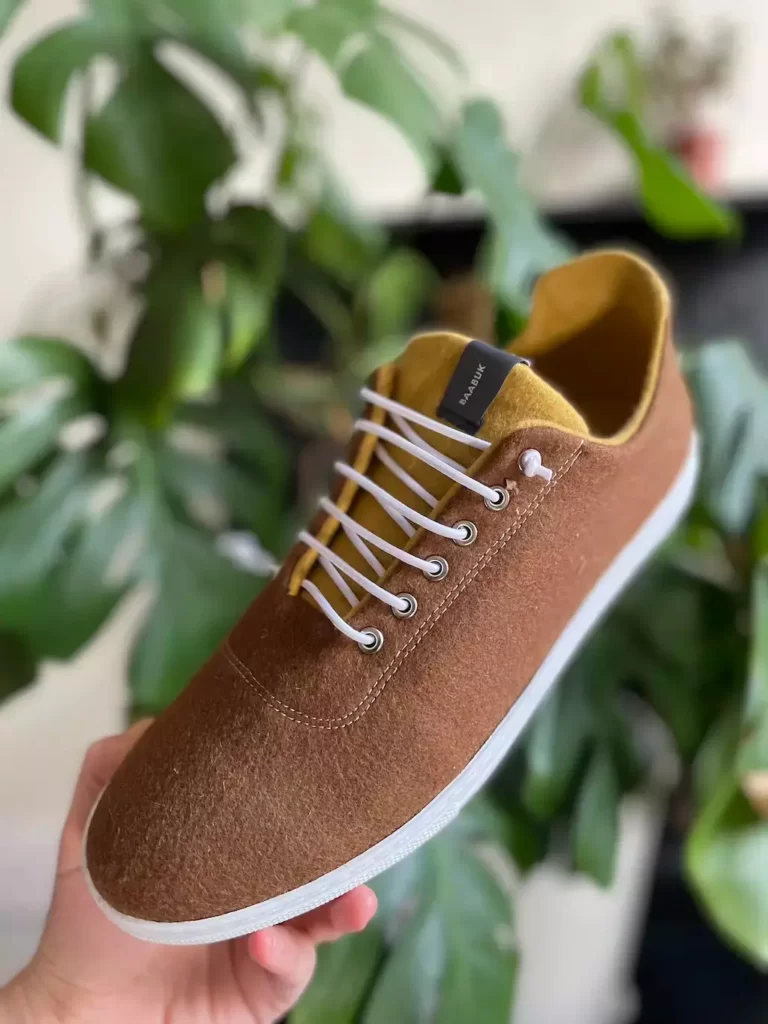
![10 Best Wool Shoes: Merino Sneakers & Slippers Compared [2026]](/images/blog/wool-shoes.webp)
![10 Best Sustainable Slippers for Toasty Feet [2025]](/images/blog/organic-slippers.webp)