
Baabuk
Rated: Great
Price: $$
Location: Switzerland
Quick verdict
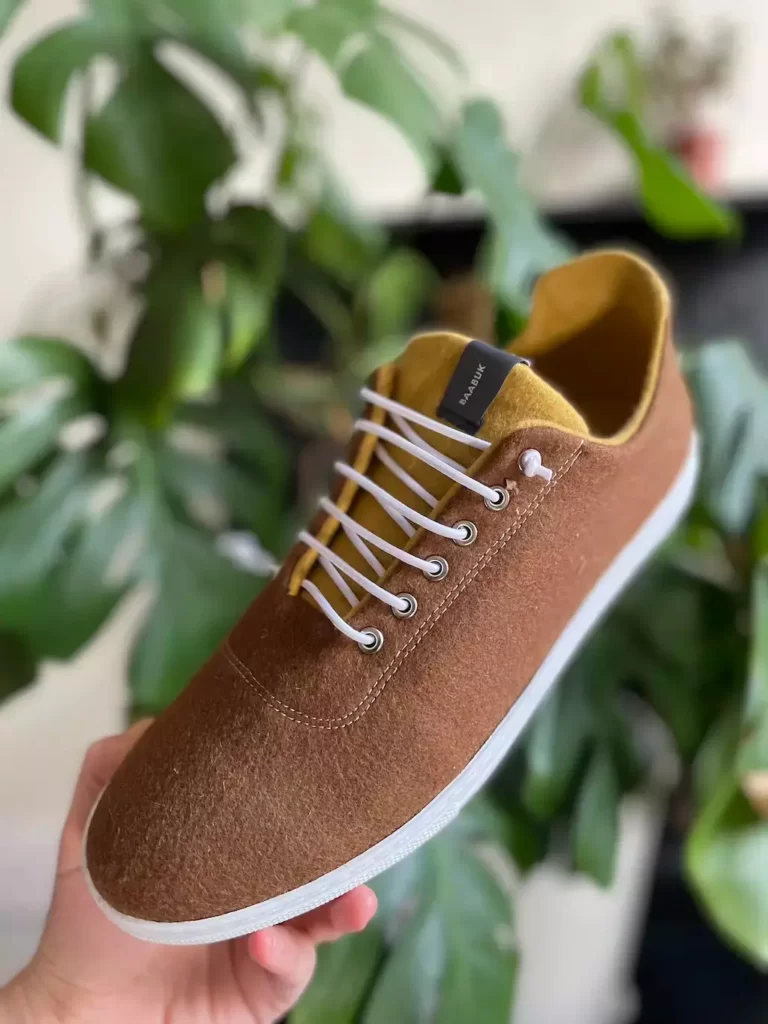
Baabuk is best for eco-conscious consumers seeking comfortable, natural wool footwear (slippers, sneakers, and boots) who value artisanal craftsmanship and certified ethical business practices. The standout is their B Corp score of 99.5, mulesing-free wool sourcing, and community-impact manufacturing in Nepal. The main caveats: no published supplier audit reports or formal Code of Conduct, and the New Zealand wool supplier is unnamed.
Key info
- Headquarters
- Lausanne, Switzerland
- Founded
- 2013
- Product categories
- Shoes, Slippers
- Price range
- $$
- Key certifications
- B Corp (99.5), REACH-certified dyes, OEKO-TEX 100 (cotton components)
Baabuk sustainability rating
Our ratings are based on a scale from 1 (We Avoid) to 5 (Excellent). How we rate
Rating breakdown
100% sheep wool, renewable, biodegradable, and thermoregulating. Portuguese Burel wool from Serra da Estrela (mulesing-free); NZ wool from a mulesing-banned country. Shunya line achieves 99% plastic-free with MIRUM® plant-based leather. Deducted for unnamed NZ supplier.
Nepal workshop pays 25% above national average, employs 14 women and 3 men. Swiss facility partners with BVA Foundation employing people with disabilities. No published Code of Conduct.
Wool is naturally sustainable. Recycled water for NZ wool washing. Upcycled wool waste into dryer balls. Take-back programme in Europe and resale platform in US. No carbon reduction programme or formal chemical management beyond REACH dyes.
Good website detail on materials, named Burel Factory in Portugal, published B Corp score changes category-by-category. However, NZ wool supplier unnamed, Nepal factory address not public, no supply chain audit reports published.
Slippers ~$79–$99, sneakers ~$135–$169, boots ~$189+. Comparable to Allbirds. 365-day warranty and repair kits demonstrate durability confidence. Returns are not free.
What they do well
- B Corp certified with improving score: 80.1 (2017), then 89.6 (2021), then 99.5 (most recent), well above the 80-point threshold and median of 50.9.
- Mulesing-free wool from traceable sources. Portuguese wool from Serra da Estrela processed at the historic Burel Factory; NZ wool from a country where mulesing is nationally banned.
- Positive community impact in Nepal. Workshop pays 25% above average wages, prioritises female employment (14 women, 3 men), guarantees no child labour.
- Circular economy initiatives including a take-back programme (Europe), resale platform (US), upcycled wool waste, repair kits, and Pomobuk collaboration using upcycled ski skins.
- Innovation with the Shunya line: a 99% plastic-free sneaker using MIRUM® plant-based leather, PLIANT™ natural rubber, and Lyocell Tencel™ stitching.
Room for improvement
- Third-party verification gaps. No published supplier audit reports, no formal Code of Conduct, and unnamed NZ wool supplier.
- Non-wool material transparency is lacking. Rubber soles, leather components, elastic laces, and adhesives are insufficiently documented.
About Baabuk
Baabuk was founded in 2013 by Dan and Galina Witting in Lausanne, Switzerland, inspired by traditional Siberian Valenki boots. They launched via Kickstarter and have since sold over 100,000 pairs in 60+ countries. The brand operates with employees on three continents.
Core material is 100% sheep wool. Sneakers use Portuguese Burel wool (from Serra da Estrela Natural Park, mulesing-free) processed at the historic Burel Factory. Slippers and boots use New Zealand wool (mulesing banned nationally). REACH-certified dyes ensure safety. The premium Shunya line uses MIRUM® (plant-based leather), PLIANT™ (bio-rubber soles), and Lyocell Tencel™ yarn.
Slippers and boot bodies are handmade in Kathmandu, Nepal. Sneakers are made at the Burel Factory in Portugal. Quality control, packaging, and logistics are handled in Switzerland through the BVA Foundation, which employs people with disabilities. The brand ships worldwide with free shipping over $200 and covers US import tariffs. Returns are customer-paid, though a "U-Turn" exchange exists. The 365-day warranty on all products demonstrates durability confidence.
Pricing sits mid-range: slippers $79–$99, sneakers $135–$169, boots $189+. Comparable to Allbirds ($98–$160) and Giesswein ($99–$149), but with arguably more artisanal production and stronger B Corp credentials.
Product highlights
Mel Slipper
Low-top wool slipper handmade in Nepal with natural crepe rubber sole
~$79
Best-seller; each pair is artisanally unique — no two are exactly alike
Sky Wooler Sneaker
High-top wool sneaker from Portuguese Burel wool
~$145
Machine washable, thermoregulating; Blacknose limited edition ($169) uses Valais sheep wool
Shunya Wooler
99% plastic-free sneaker with MIRUM® and PLIANT™
~$179
Pioneering effort to eliminate synthetics from sneaker construction
Pomobuk Slipper
Wool slipper with upcycled ski-skin soles
~$79
Collaborative circular economy product — soles rescued from Pomoca ski-skin cuttings

![Baabuk vs Allbirds: Which Wool Shoe is Right for You? [2025]](/images/blog/baabuk-vs-allbirds.webp)

![15 Best Allbirds Alternatives: Tested & Compared [2026]](/images/blog/shoes-like-allbirds.webp)