Madewell
Rated: Good
Price: $$
Location: USA
Quick verdict
A denim-focused brand with a genuinely impressive jeans recycling programme and growing Fair Trade commitment. But sustainability is heavily concentrated in denim while the rest of the range lags. Madewell's partnership with Blue Jeans Go Green has collected 1.6 million garments, diverted 548+ tonnes from landfills, and insulated 690+ homes through Habitat for Humanity. The Fair Trade denim programme targets 90% certification by 2025 with meaningful worker premium payments. However, sustainability claims apply primarily to denim. The hundreds of other products have no comparable certifications. Remake scored the brand just 10/150 with 0/23 on wages, and Fashion Revolution rates parent J.Crew Group at only 11-20% transparency.
Key info
- Headquarters
- New York, NY, USA
- Founded
- 2006 (relaunched; original brand 1937)
- Product categories
- Denim, Womenswear
- Price range
- $$
- Key certifications
- Fair Trade USA (denim factories), Better Cotton Initiative, Leather Working Group, Good Cashmere Standard, Bluesign (denim chemical management), SBTi-approved targets (via J.Crew Group), Regenagri (regenerative agriculture). No B Corp, Climate Neutral, GOTS, or 1% for the Planet.
Madewell sustainability rating
Our ratings are based on a scale from 1 (We Avoid) to 5 (Excellent). How we rate
Rating breakdown
70%+ of denim key fibres are sustainably sourced (organic, recycled, Regenagri, or Better Cotton), partnering with premium mills like Candiani (Italy) and Kaihara (Japan). However, non-denim categories still rely heavily on conventional materials, recycled synthetics account for only 4%, and virgin polyester/nylon remain common across the broader range.
9 Fair Trade certified factories with $575,452 in worker community fund payments and an exemplary Saitex partnership. However, only 40% of factories were in full compliance with Madewell's own code, 4% had serious issues, no evidence of living wages exists, and Remake scored 0/23 on wages and well-being.
SBTi-approved emissions targets (85% Scope 1 and 2 reduction by 2030) and the denim recycling programme (548+ tonnes diverted) are real. Saitex's zero-discharge facility recycles 98% of water. But high-volume production (new drops every 4-6 weeks), heavy conventional material usage, and limited Scope 3 progress undermine these wins.
Publishes annual "Do Well" sustainability reports and some material percentages. But Fashion Transparency Index rates J.Crew Group at just 11-20%, Remake scored traceability at 0/8, no public supplier list exists, and audit reports are not disclosed.
Industry-leading denim recycling: Blue Jeans Go Green partnership has collected 1.6 million garments and insulated 690+ homes. Madewell Forever ecosystem combines trade-ins, ThredUp resale, recycling, and in-store denim repairs. Regenerative agriculture pilot with 27 farms. However, circularity applies only to denim.
What they do well
- Industry-leading denim recycling: Blue Jeans Go Green partnership has collected 1.6 million garments, diverted 548+ tonnes from landfills, and insulated 690+ homes through Habitat for Humanity
- Growing Fair Trade denim commitment. Targeting 90% Fair Trade certified denim by 2025 with $575,452 in worker premium payments; key partner Saitex is also B Corp certified
- Regenerative agriculture investment. Pilot programmes with 27 farms in Texas and Louisiana, with 12% of denim styles using regenerative cotton
- Madewell Forever circularity ecosystem. Combining denim trade-ins, ThredUp resale partnership, Blue Jeans Go Green recycling, and in-store denim repairs
Room for improvement
- Sustainability is a denim story, not a brand story: Fair Trade, premium mills, and recycling apply primarily to denim; hundreds of other products have no comparable certifications, and marketing blurs this distinction
- Remake's damning scorecard: 10/150 with 0/8 on traceability, 0/23 on wages, and 0/15 on commercial practices reveals fundamental gaps behind the sustainability marketing
- High-volume production contradicts messaging. New drops every 4-6 weeks with thousands of SKUs and fast-fashion-like release cadences overwhelm the environmental benefits of targeted denim programmes
About Madewell
The original Madewell was a 1937 New Bedford, Massachusetts workwear factory. J.Crew acquired the dormant brand name in 2004 and relaunched it in 2006 targeting women in their 20s-30s with casual, denim-centric fashion. Under CEO Libby Wadle, Madewell surged to $600M+ annual revenue by 2019, outperforming the declining J.Crew brand—a planned IPO was shelved in March 2020, and J.Crew Group filed Chapter 11 bankruptcy on May 4, 2020: the first major national retailer to do so during the pandemic. The group emerged in September 2020 with Anchorage Capital Group as majority owner.
The sustainability story centres on denim. Madewell operates roughly 266 factories across 25 countries, but the star partnership is with Saitex in Vietnam, which is both B Corp and Fair Trade certified, operates a zero-discharge facility recycling 98% of water, and uses renewable energy. Denim is sourced from premium mills including Candiani (Italy) and Kaihara (Japan). Over 50% of cotton meets sustainability standards, though this applies primarily to denim.
The Blue Jeans Go Green partnership, running since 2014, has collected 1.6 million garments and diverted 548+ tonnes from landfills. Collected denim is converted into insulation, with 690+ homes insulated through Habitat for Humanity. The Madewell Forever ecosystem adds trade-ins, ThredUp resale, and in-store denim repairs (hemming, patching, mending). Fair Trade certification covers 9 factories with $575,452 in community fund payments.
The gap between denim and everything else is significant. Non-denim categories still rely heavily on conventional materials, with recycled synthetics at only 4%. Remake scored the brand 10/150 in 2022, with zero marks on traceability, wages, and commercial practices. Fashion Revolution rates parent J.Crew Group at just 11-20% transparency. The brand has shown modest but real progress in recent years. Pricing ($98-$158 for jeans, frequently on sale to ~$50) makes Madewell the most accessible brand for denim specifically.
Product highlights
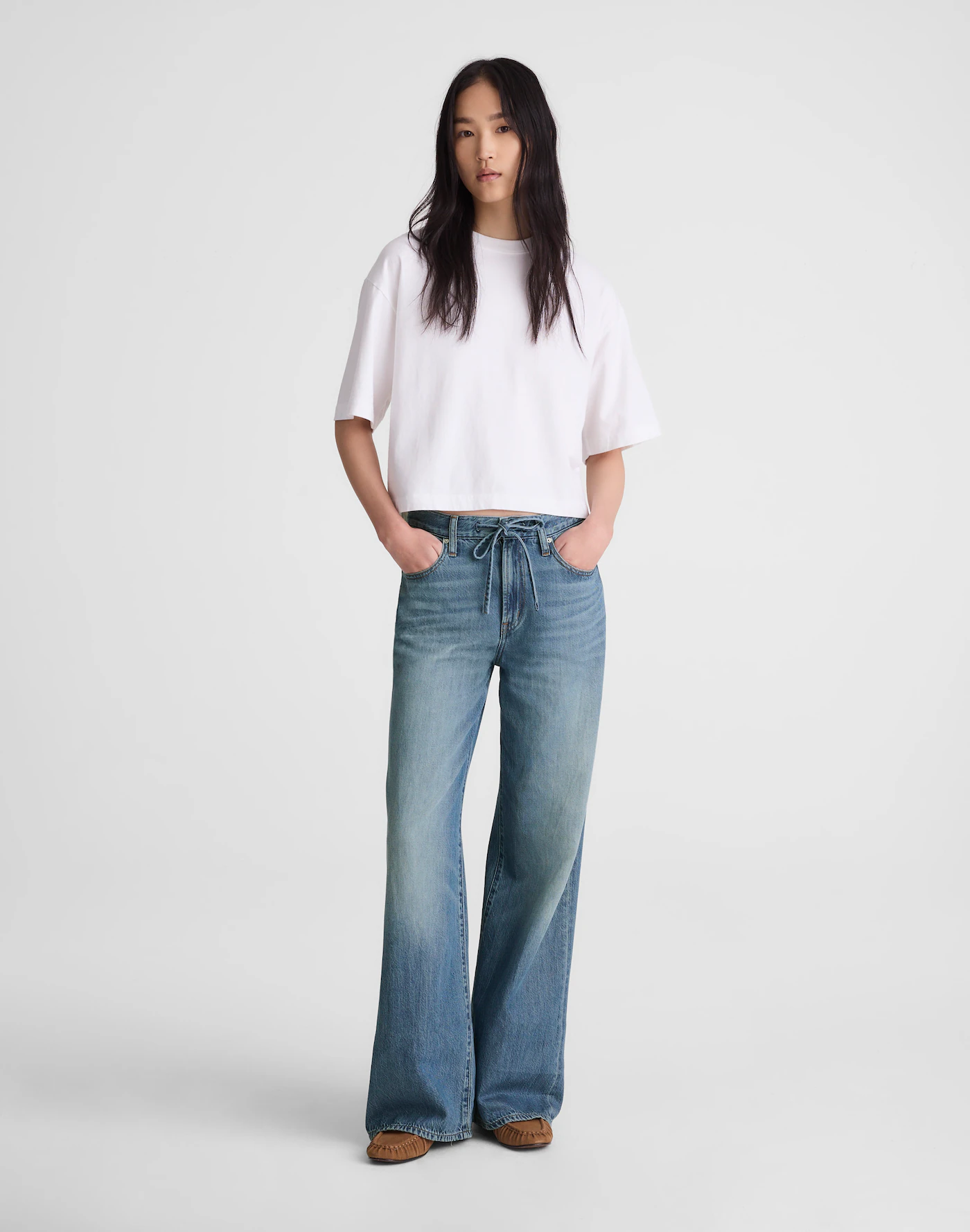
The Perfect Vintage Jean
High-waisted, slightly tapered organic cotton denim from premium mills, available in 50+ washes with Fair Trade certified options.
$128–$148
Madewell's bestseller, available in Fair Trade certified versions with organic cotton denim from Candiani and Kaihara mills.
The Transport Tote
Iconic leather carryall with Leather Working Group-certified responsibly sourced leather.
~$188
One of the few accessories with supply chain credentials: LWG-certified leather with a design built for daily longevity.
Baggy Tapered Jeans
Relaxed fit, high rise cotton denim with select organic and recycled options, sizes XXS-3XL.
$98–$148
Entry-level price point for Madewell denim with accessible sizing including curvy, petite, and tall options.
(Re)sourced Cashmere Fisherman Cardigan
Good Cashmere Standard certified cashmere in chunky knit: Madewell was the first US brand to join the Aid by Trade Foundation for cashmere.
$148–$178
Demonstrates material certification extending beyond denim—a meaningful step toward brand-wide sustainability.