Karen Kane
Rated: Great
Price: $$
Location: USA
Quick verdict
Karen Kane is best for shoppers seeking polished, California-inspired womenswear with genuine Made-in-USA manufacturing and a B Corp stamp. Approximately 90% of production happens in their own Los Angeles factory, a rarity in the industry that was recognized at an Obama White House summit. The critical caveat: the brand's environmental credentials are weak relative to its sustainability marketing. There are few lower-impact materials, no meaningful climate targets, no textile waste programs, and no hazardous chemical management. This is more accurately framed as a "better conventional" brand than a fully sustainable one.
Key info
- Headquarters
- Vernon, California (Los Angeles area), USA
- Founded
- 1979
- Product categories
- Womenswear
- Price range
- $$
- Key certifications
- B Corp (score 82.2)
Karen Kane sustainability rating
Our ratings are based on a scale from 1 (We Avoid) to 5 (Excellent). How we rate
Rating breakdown
Uses cotton, silk, wool, linen, Tencel, synthetic blends, jersey knits, and some vegan leather. The brand uses few lower-impact materials; organic cotton and recycled polyester appear in some items but are not the majority. No GOTS, OEKO-TEX, or fabric-specific certifications.
~90% manufactured in their own Vernon/LA facility, providing meaningful domestic labor protections. Family-operated since 1979 with over 70% women in management. However, no evidence of living wages in the supply chain and no supplier financial security. Glassdoor employee rating is a mixed 2.9/5.
Concrete actions exist: 1 million hangers reused annually, 35% renewable energy at their facility, 6 million pounds of CO2 offset via World Land Trust, fabric scrap repurposing. Despite this, no evidence of meaningful climate targets, textile waste reduction goals, or hazardous chemical management, reflecting significant environmental gaps.
B Corp certification provides baseline third-party validation (score 82.2), and the brand communicates sustainability initiatives on its website. But no supplier lists, factory audit reports, detailed environmental metrics, or living wage commitments are publicly available.
At $88–$198 for most items, pricing sits in the mid-to-upper contemporary range, comparable to Eileen Fisher (more sustainable) and J.Jill (less sustainable). Frequent 20% off promotions improve accessibility. The Made-in-USA manufacturing partially justifies the premium.
What they do well
- Certified B Corporation (score 82.2): one of few mid-market fashion brands with this third-party validation of social and environmental practices
- ~90% manufactured in Los Angeles at their own factory: verified by US Trade Representative facility tour and Obama White House "Insourcing American Jobs" summit invitation in 2012
- Concrete, quantified environmental actions: 1 million hangers reused/year, 6 million pounds CO2 offset, 35% renewable energy, fabric scraps repurposed into stuffing
- Size-inclusive pioneer offering XS to 3XL plus petites: ahead of industry trends on body diversity
- Family-owned for 45+ years across two generations, insulated from shareholder pressure driving fast fashion
Room for improvement
- Significant environmental credibility gap: the brand markets itself as sustainable, but uses few lower-impact materials, has no meaningful climate targets, no textile waste programs, and no hazardous chemical management
- Limited supply chain transparency for the ~10% of production that occurs overseas, essentially zero public information about non-US manufacturing
About Karen Kane
Karen Kane was founded in 1979 by Karen and Lonnie Kane, who launched from their Studio City garage and built it into one of the few remaining American-made women's fashion brands. Their sons Michael (Director of Marketing/Co-President) and Robert (designer) have since joined the family business.
The brand manufactures approximately 90% of its products at its own facility in Vernon, California, a commitment that earned an invitation to the Obama White House's "Insourcing American Jobs" summit in 2012. Materials include cotton, silk, wool, linen, Tencel, jersey knits, and some vegan leather.
The brand earned B Corp certification in 2020 (score 82.2) and has implemented specific environmental initiatives: 1 million hangers reused annually, 35% renewable energy at their California facility, LED lighting throughout manufacturing, and a partnership with World Land Trust offsetting 6 million pounds of CO2 through rainforest protection.
Clothing ranges from $88–$198, with sales bringing effective prices lower. The brand is available through its own site, Nordstrom, Zappos, and other retailers—an honest directory listing should frame Karen Kane as a brand with meaningful domestic manufacturing credentials and a B Corp commitment, while being transparent about its environmental gaps.
Product highlights
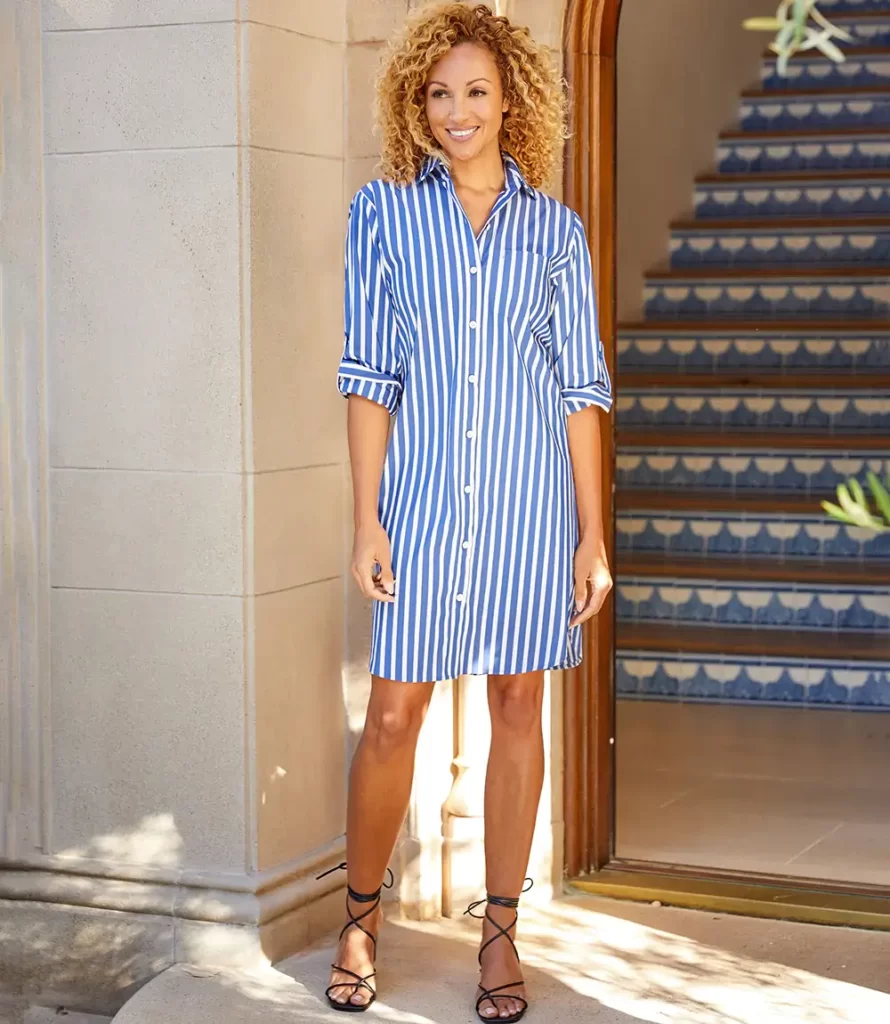
Three Quarter Sleeve A-Line Dress
Jersey knit dress, iconic silhouette
~$118
Perennial bestseller; praised for travel-friendliness, comfort, and washability
Cascade Wrap Dress
Draped wrap silhouette in black and navy
$118
Flattering design that consistently generates positive customer reviews
Brigitte Midi Dress
Double V-neck midi in navy and tie-dye options
$128
Versatile midlength showing the brand's California-casual DNA
Cropped Vegan Leather Pants
Faux leather cropped pants, XS–XL
$129
A fashion-forward departure showing material diversity beyond jersey knits