
COS
Rated: Fair
Price: $$$
Location: UK
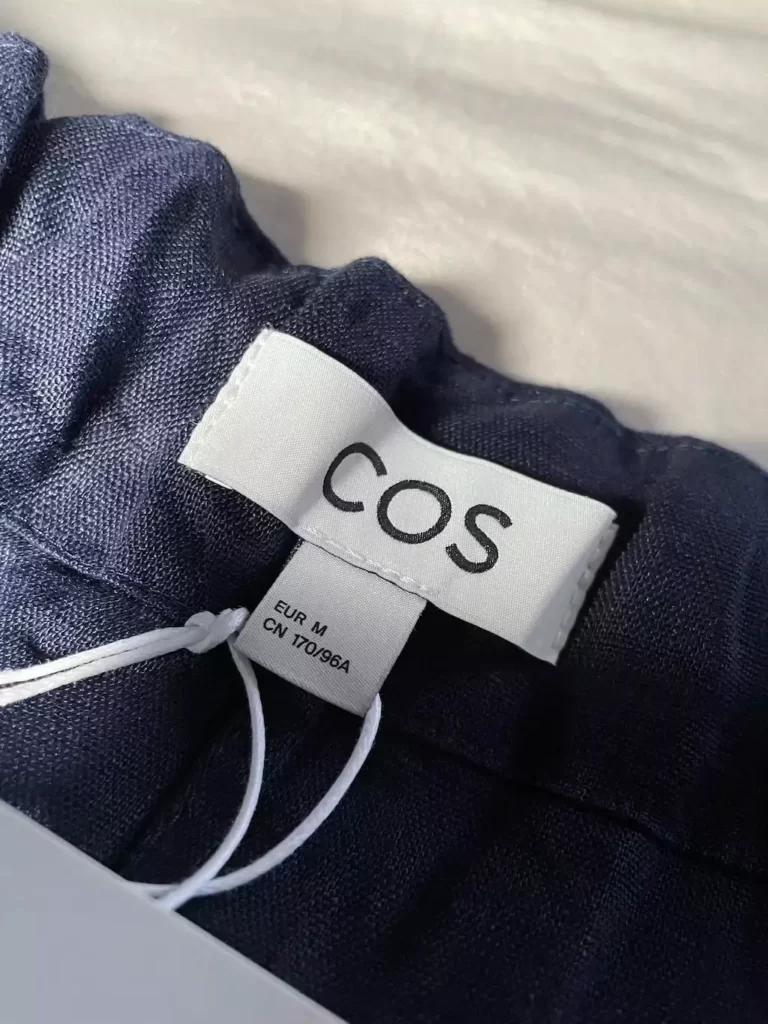
Quick verdict
COS is best for minimalism-minded consumers who want clean Scandi design with the most developed circularity programs in high-street fashion: COS Resell, Full Circle garment collection, and Restore restoration service. Parent H&M Group provides industry-leading transparency (71% Fashion Transparency Index, CDP A-list). However, the H&M Group greenwashing shadow looms large. The Higg Index scandal, failed living wage promise, and "60% of sustainability claims unsubstantiated" finding all affect COS.
Key info
- Headquarters
- London, UK (design); Stockholm, Sweden (H&M Group HQ)
- Founded
- 2007
- Product categories
- Womenswear, Menswear, Minimalist
- Price range
- $$$
- Key certifications
- Part of H&M Group: SBTi 1.5°C aligned, CDP A-rating, GOTS (suppliers), GRS, RWS, RDS, BCI (100% preferred cotton), ZDHC, OEKO-TEX, FSC packaging. H&M Group ranked #1 in Fashion Transparency Index 2025 (71%).
COS sustainability rating
Our ratings are based on a scale from 1 (We Avoid) to 5 (Excellent). How we rate
Rating breakdown
COS claims 89% of materials meet sustainability standards, with 95% of base fabrics sustainably sourced or recycled. H&M Group achieved 85% recycled or sustainably sourced (FY2024). GOTS suppliers, GRS, RWS, RDS, BCI (100% preferred cotton), OEKO-TEX. However, COS still produces regular new arrivals characteristic of fast fashion.
H&M Group publishes monthly-updated supplier list (6,100+ companies): among the most comprehensive in fashion. However, H&M promised 850,000 workers a living wage by 2018 — never delivered. 2023 Myanmar reports documented workers' rights abuses.
H&M Group: SBTi 1.5°C aligned (56% all-scope by 2030, net-zero by 2040), CDP A-rating, 41% Scope 1&2 reduction, 24% Scope 3 reduction vs. 2019, 96% renewable energy, coal boilers reduced from 118 to 27. COS-specific circularity programs (Resell, Full Circle, Restore) are meaningfully developed.
H&M Group ranked #1 in Fashion Transparency Index 2025 (71%). Monthly-updated supplier list with 6,100+ companies. CDP A-list. Dow Jones Sustainability Index 13 consecutive years. However, transparency measures disclosure, not actual performance. And the group has faced significant greenwashing accusations.
Shirts ~$79, dresses $69–$250, cashmere knitwear $99+, coats $200–$450. Premium within H&M Group but well below true luxury. Clean minimalist aesthetic and quality fabrics (especially merino and leather accessories) are praised.
What they do well
- Most developed circularity programs in high-street fashion: COS Resell (peer-to-peer marketplace), COS Full Circle (in-store garment collection), COS Restore (restoration service), and Repurposed collections transforming production waste into new garments.
- Parent company leads fashion transparency: H&M Group ranked #1 in Fashion Transparency Index 2025 (71%), CDP A-list, Dow Jones Sustainability Index 13 consecutive years, and Stand.earth Fossil Free Fashion Scorecard highest-ranked (2025).
- Strong material and climate credentials: 89% of COS materials meet sustainability standards. H&M Group achieved SBTi 1.5°C alignment, 96% renewable energy in own operations, and 100% preferred cotton via BCI.
- Art and design-led brand positioning: Distinguished through cultural collaborations (Serpentine Gallery, Salone del Mobile, Nendo, Snarkitecture) rather than celebrity endorsements, creating genuine design credibility.
- Monthly-updated supplier transparency: H&M Group's supplier list detailing 6,100+ companies is among the most comprehensive disclosures in fashion, updated monthly.
Room for improvement
- H&M Group greenwashing controversies directly affect COS: The 2022 Higg Index scandal (Norwegian Consumer Authority ban), Changing Markets finding "60% of claims unsubstantiated," class action lawsuits, and the failed promise of 850,000 living wages by 2018 all taint COS's sustainability positioning.
- Fast fashion model under premium clothing: Despite positioning as timeless and minimalist, COS still produces regular new arrivals. It remains a 250+ store brand owned by a fast fashion conglomerate.
About COS
COS (Collection of Style) was conceived in 2006 and launched on March 16, 2007, with a flagship on London's Regent Street. It was H&M Group's first portfolio brand outside the core H&M line, positioned as a bridge between mass-market and high-end fashion. COS operates an estimated 250+ stores in 47 countries.
Parent H&M Group provides industry-leading sustainability infrastructure. Ranked #1 in Fashion Transparency Index 2025 (71%), CDP A-list, SBTi 1.5°C aligned, and monthly-updated supplier list with 6,100+ companies. COS-specific initiatives include the Resell peer-to-peer marketplace, Full Circle in-store garment collection, Restore restoration service, and Repurposed collections from production waste.
However, H&M Group's greenwashing history is significant. The 2022 Higg Index scandal saw environmental scorecards with errors portraying products better than reality. The Norwegian Consumer Authority banned the practice. Changing Markets found 60% of sustainability claims unsubstantiated. Most critically, H&M promised 850,000 workers a living wage by 2018, which was never delivered.
Product highlights
Chunky Cashmere Sweater
Oversized cashmere knit in the brand's signature minimalist silhouette
~$250
Named in the Q3 2025 Lyst Index as one of fashion's top 10 hottest products; a cult item with its own following
Pleated Wide-Leg Trousers
Loose-cut trousers with triple pleats and concealed hook-and-eye closure
~$99–$135
Core COS silhouette exemplifying the brand's clean, architectural approach to everyday dressing
COS Resell Marketplace
Online peer-to-peer platform for buying and selling pre-loved COS garments
Varies (secondhand)
The brand's most innovative circularity initiative. Extends garment life and keeps COS pieces in circulation
Repurposed Collection
Limited-edition garments made from production waste and surplus materials
~$79–$200
Transforms factory waste into wearable pieces, One of the few high-street brands doing genuine upcycling at scale

![Chacos vs Birkenstocks: Which Sandal is Right for You? [2025]](/images/blog/chacos-vs-birkenstocks.webp)