Vivobarefoot
Rated: Great
Price: $$$
Location: UK
Quick verdict
Best for health-conscious consumers seeking premium barefoot footwear from a brand with strong B Corp credentials (score 119.3) and an industry-leading circular economy programme. Vivobarefoot's ReVivo resale/repair programme completed ~63,000 sneaker repairs last year and accounts for 10–15% of total sales (proving circular models can work commercially. The brand openly states: "We don't make sustainable footwear yet") an unusually honest admission. The caveat: Trustpilot has deteriorated to 2.7/5 from ~12,400 reviews, dominated by customer service complaints (AI chatbot loops, inability to reach humans, slow refunds).
Key info
- Headquarters
- London, United Kingdom
- Founded
- 2012
- Product categories
- Shoes, Activewear
- Price range
- $$$
- Key certifications
- B Corp (score 119.3), Vegan Society certified (select styles), Woolmark Wool Blend Performance (merino components)
Vivobarefoot sustainability rating
Our ratings are based on a scale from 1 (We Avoid) to 5 (Excellent). How we rate
Rating breakdown
Unusually diverse portfolio: Wild Hide Leather from free-roaming cattle, Woolmark merino, TENCEL, natural rubber, cork, hemp, recycled PET (81% recycled in some styles), BLOOM Algae EVA, HyphaLite™ TC (biobased/compostable), and PLIANT™ (world's first naturally cured performance rubber). Exploring mycelium, recycled leather, and MIRUM.
Code of Conduct covers ILO freedoms. Over 80% supply chain traceability with interactive partner map. Ethiopia factory pays quadruple the average local wage. However, sources from countries with extreme labour abuse risk, living wages unverified across full supply chain, and partial supply chain tracing.
ReVivo programme completed ~63,000 repairs in latest fiscal year (10–15% of sales). 100% sea freight via Maersk since March 2024. VivoBiome scan-to-print future vision. However, full Scope 3 emissions not yet measured (only 110.62 t CO₂e for Scope 1, 2, and limited Scope 3).
Publishes "Unfinished Business" annual report (52 pages, 384 indicators from 9 standards). Interactive partner map showing suppliers. Each product page lists specific factory location. B Corp score of 119.3. Openly admits shortcomings, a rare and commendable level of honesty.
Primus Lite ~$145–$160, Tracker boots ~$220–$250+, lifestyle shoes ~$115–$150, premium editions up to $550. Premium pricing justified by barefoot health benefits, innovative materials, and ReVivo repair guarantee. However, customer service deterioration and some durability complaints undermine the premium experience.
What they do well
- B Corp score of 119.3: significantly above Veja (84.2), Allbirds (89.4), and TOMS (96.3), with Environment seeing the largest improvement in 2024 recertification
- ReVivo resale/repair programme completed ~63,000 sneaker repairs in the latest fiscal year, accounting for 10–15% of total company sales: one of the most commercially successful circular economy initiatives in footwear
- Radical material innovation: HyphaLite™ TC (100% biobased, biodegradable, compostable), PLIANT™ (world's first naturally cured rubber outsole), and VivoBiome scan-to-print made-to-order vision
- "Unfinished Business" annual report: 52 pages covering 384 indicators from 9 standards, with candid admission: "We don't make sustainable footwear yet"
- Seventh-generation cobbler heritage: founders Galahad and Asher Clark descended from C & J Clark Ltd (Clarks shoes, est. 1825)
Room for improvement
- Living wages unverified across full supply chain, while Ethiopia factory pays quadruple local average No Fair Trade, OEKO-TEX, or Leather Working Group certification.
About Vivobarefoot
Cousins Galahad Clark (CEO, now "Chief Ecosystem Officer") and Asher Clark (Creative Director) founded Vivobarefoot in 2012 as a standalone business in London. They are seventh-generation cobblers descended from the founders of C & J Clark Ltd (Clarks shoes, est. 1825). Galahad's father Lance Clark (former Clarks MD) chairs the board. The company nearly went bankrupt in 2012 after overestimating demand during the barefoot running trend.
Manufacturing occurs primarily in Vietnam (via Tier 1 partner Stella International), Portugal, and Ethiopia (Soul of Africa range at Pittards tannery/factory in Addis Ababa, employing 1,500+ workers paid quadruple the average local wage). The brand publishes an interactive partner map showing suppliers and claims over 80% traceability. Revenue reached approximately £91.4 million with over 1 million pairs sold in 2024/2025.
The ReVivo resale/repair programme, launched in 2020, completed approximately 63,000 sneaker repairs in the most recent fiscal year and accounts for 10–15% of total company sales. Customers send worn shoes for inspection, resoling, repair, and reconditioning. A 100-day trial return policy and 6-month guarantee supplement the programme. The brand achieved B Corp certification in 2020, recertified in January 2024 with a score of 119.3.
Product highlights
Primus Lite IV
Lightweight barefoot training shoe; recycled PET upper (81% recycled); flexible thin sole for natural movement
~$145–$160
Flagship performance shoe; one of the highest-recycled-content barefoot trainers; ReVivo repairable
Tracker Forest ESC
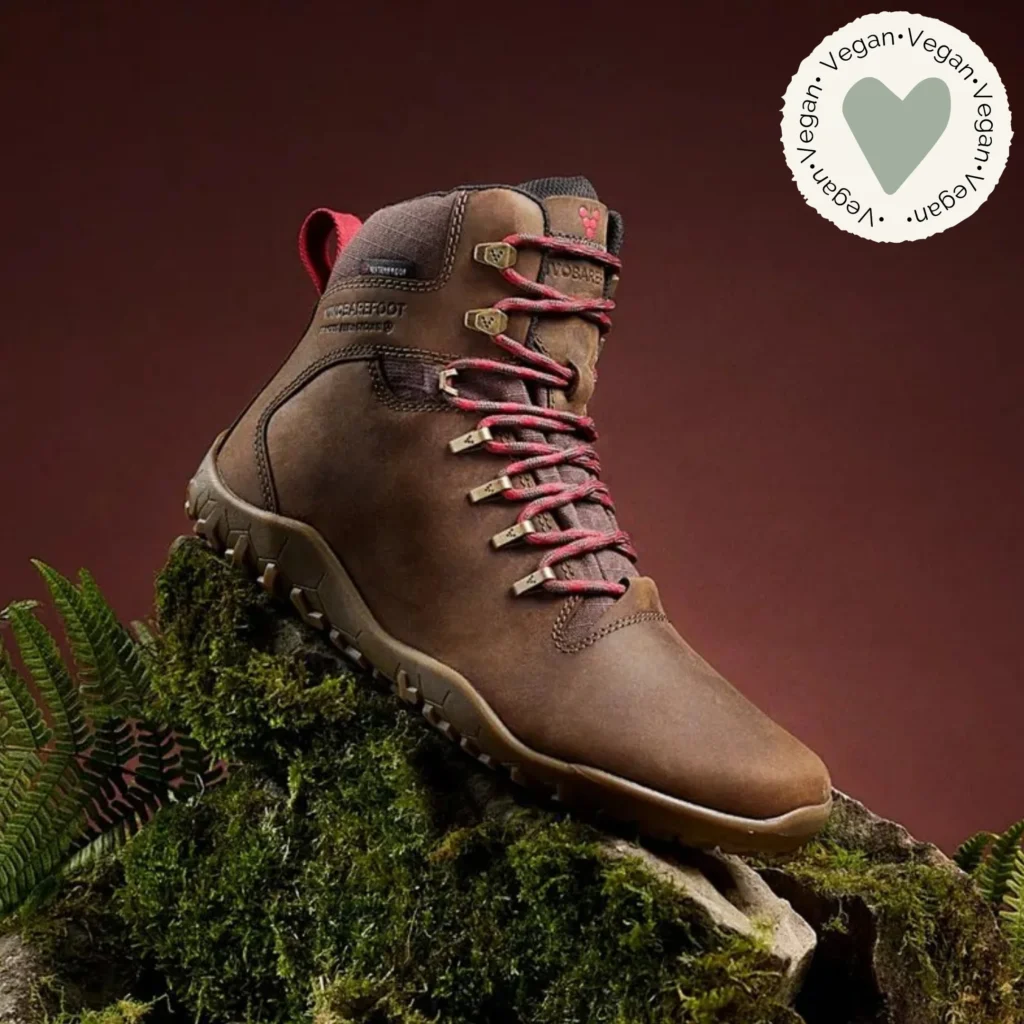
Barefoot hiking boot with Wild Hide Leather from free-roaming cattle; natural rubber sole; thermal insulation
~$220–$250+
Proves barefoot design works for serious hiking; Wild Hide Leather from small independent farms
Geo Court III
Minimalist lifestyle sneaker; clean court-shoe design suitable for casual and smart-casual wear
~$150
The brand's most versatile everyday shoe; bridges barefoot functionality with conventional aesthetics
Addis Oxford
Formal barefoot shoe made in Ethiopia at Pittards factory; Soul of Africa range
~$115
Made at factory paying quadruple local average wage; supports 1,500+ Ethiopian workers; Soul of Africa Trust funds education
![9 Best Sustainable Shoes Like Crocs: Eco-Friendly Crocs Alternatives [2026]](/images/blog/shoes-like-crocs.webp)
![13 Best Sustainable Running Shoes: Eco-Friendly & Ethical [2026]](/images/blog/sustainable-running-shoes.webp)