
Thousand Fell
Rated: Great
Price: $$
Location: USA
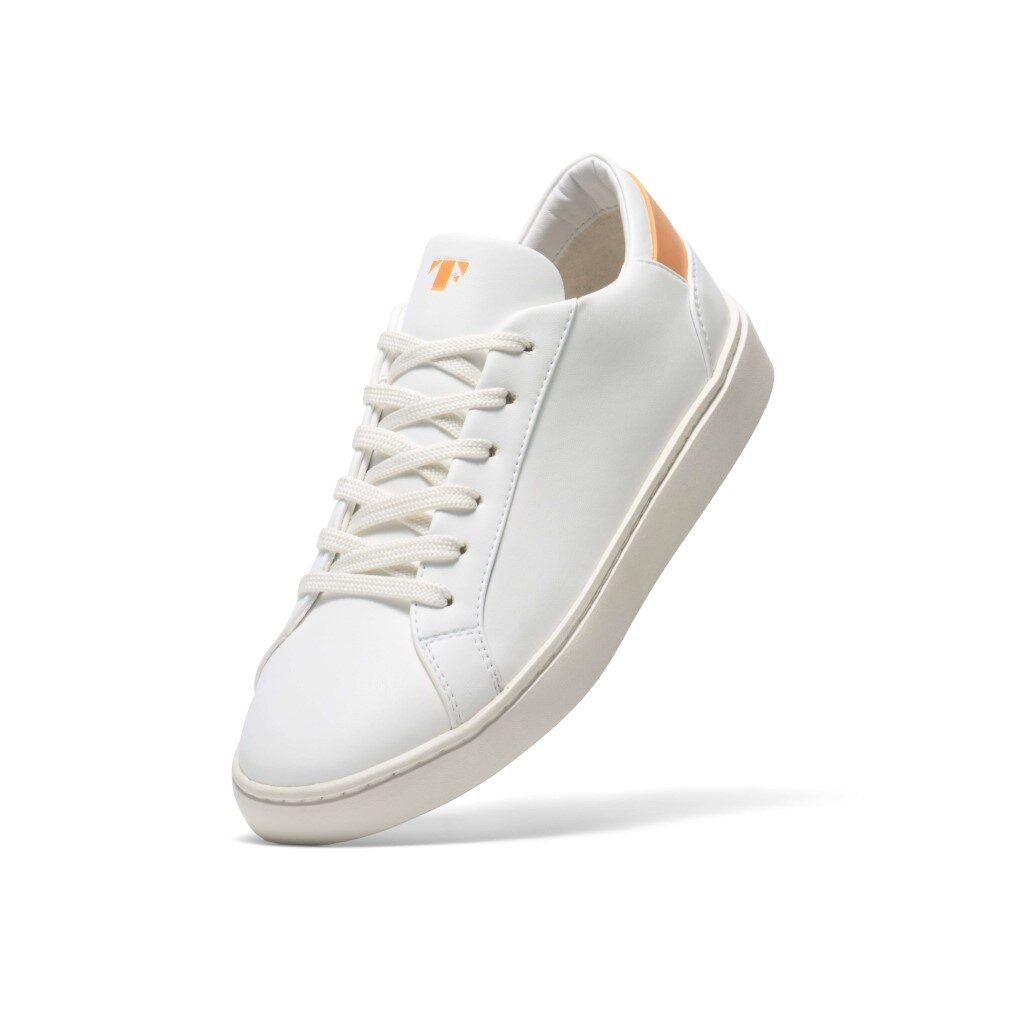
Quick verdict
Best for eco-conscious consumers seeking stylish, minimalist sneakers with a genuine end-of-life recycling solution. The standout feature is their closed-loop recycling program powered by SuperCircle (every shoe is designed to be fully recyclable, and customers earn $20 credit when returning worn pairs. The key caveat: labor transparency is weak, with no public Code of Conduct, no evidence of living wages, and manufacturing in Brazil with no independent verification.
Key info
- Headquarters
- New York City, USA
- Founded
- 2018
- Product categories
- Shoes, Sneakers
- Price range
- $$
- Key certifications
- 1% for the Planet member, Textile Exchange member, 100% vegan product line
Thousand Fell sustainability rating
Our ratings are based on a scale from 1 (We Avoid) to 5 (Excellent). How we rate
Rating breakdown
Uppers from recycled PET (water bottles), structural components from coconut husk, sugarcane, and palm leaf fibers, Insoles from recycled rubber yoga mats. Bio-based corn waste resin coating and natural quartz stain barrier. 100% vegan. However, only a medium proportion of lower-impact materials overall.
The brand's weakest area. Manufactured at a family-run factory in Brazil. No public Code of Conduct, no evidence of living wages, no Fair Trade or SA8000 certifications, no factory audits disclosed. Brazil is flagged as high-risk for labor abuse.
Strong circularity: fully recyclable sneakers with SuperCircle take-back program and Soles4Souls partnership for donation, Member of 1% for the Planet. Avoids plastic packaging. However, no published emissions data, no climate policy, and no reduction targets.
Discloses materials in detail and mentions Brazilian manufacturing. Traces most of its supply chain. But no factory list, no supplier Code of Conduct, no impact reports, no emissions data, and no wage data.
Sneakers range $120–$145 (with $20 recycling deposit returned as store credit). Comparable to Veja ($100–$200), Allbirds ($98–$160), and Cariuma ($89–$149). Competitive DTC pricing with student discount (20%) available. Some durability concerns undercut long-term value.
What they do well
- Genuine closed-loop recycling: SuperCircle-powered take-back program returns worn shoes for $20 credit; shoes are refurbished and donated (via Soles4Souls) or fully disassembled for material recycling. They also accept non-Thousand Fell clothing items for $5 credit.
- Innovative bio-based material portfolio: 12+ recyclable/biodegradable ingredients including coconut husk, castor bean foam, corn waste resin, natural quartz, aloe vera liner, and recycled rubber yoga mat insoles
- 100% vegan product line with PETA-Approved Vegan status; bio-leather from corn waste replicates real leather look and feel
- 1% for the Planet member: 1% of every purchase goes to a nonprofit of the consumer's choice; also a Textile Exchange member
- Community impact beyond product: beach cleanup programs in Ghana, composting initiatives in NYC, zero-waste college campus initiatives, wildfire recovery tree planting
Room for improvement
- Labor transparency is the weakest area. There is no published Code of Conduct, no evidence of living wages, no factory audit disclosures, and no supplier list. The brand states it partners with an ethical factory but provides no independent verification.
- No climate policy or emissions tracking, despite carbon/water offsetting claims, there are no published emissions data, reduction targets, or formal climate policy. Independent analysis notes Thousand Fell does not report on its emissions tracking or targets.
About Thousand Fell
Thousand Fell was founded in 2018 by Chloe Songer (CEO, ex-Gap and Alexander Wang) and Stuart Ahlum (COO, footwear supply chain veteran). The co-founders met while working in China and spent two years researching materials before launching what they call "the world's first fully recyclable sneaker." Headquartered in New York City, the brand manufactures at a family-owned factory in Brazil.
Every shoe is constructed from 12+ biodegradable or recyclable ingredients: recycled PET for uppers and laces, coconut husk and sugarcane for structure, castor bean foam for cushioning, corn waste bio-resin for the water-resistant coating, natural quartz barrier, aloe vera liner, and recycled rubber insoles. The entire line is 100% vegan.
The brand's flagship initiative is its closed-loop system powered by SuperCircle, the founders' second company, which now serves 40+ brands including J.Crew, GUESS, and SKIMS. Customers return worn shoes for $20 store credit; good-condition pairs go to Soles4Souls, while worn-out pairs are disassembled for material recycling.
Thousand Fell is a member of 1% for the Planet and Textile Exchange, with B Corp certification still pending (not yet achieved). Products ship in plastic-free packaging. Returns are accepted within 30 days. Available DTC via thousandfell.com and through Zappos and Amazon. Pricing at $120–$145 is competitive with Allbirds, Veja, and Cariuma in the sustainable sneaker space. CEO Chloe Songer was named to Forbes 30 Under 30 (Retail & Ecommerce, 2022).
Product highlights
Lace-Up Sneaker
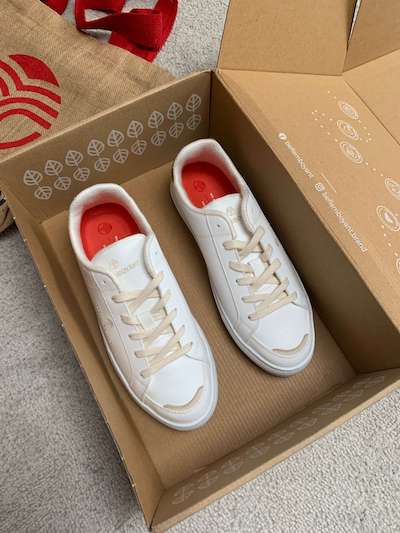
Signature fully recyclable sneaker; recycled PET uppers, coconut husk details, stain-proof corn waste coating
~$145
The original "first fully recyclable sneaker" that launched the brand; praised by MindBodyGreen and Refinery29
Court Sneaker
Chunkier Nike Dunk-inspired silhouette with same sustainable materials platform
~$130
Most color variety (15+ options); broader streetwear appeal
Slip-On Sneaker
Vans-style slip-on with aloe vera-coated liner for sockless wear, fully recyclable
~$120
Most accessible entry point; frequently cited as a sustainable Toms alternative
High Court Sneaker
Mid-top/high-top version expanding the lineup into fashion-forward territory
~$145–$155
Newer addition pushing beyond the brand's low-profile roots
![10 Best Sustainable Shoes Like Toms: Tested & Compared [2026]](/images/blog/shoes-like-toms.webp)
![14 Best Vegan Sneakers for Cruelty-Free Feet [2026]](/images/blog/vegan-sneakers.webp)
![15 Best Allbirds Alternatives: Tested & Compared [2026]](/images/blog/shoes-like-allbirds.webp)