
Flamingos Life
Rated: Great
Price: $$
Location: Spain
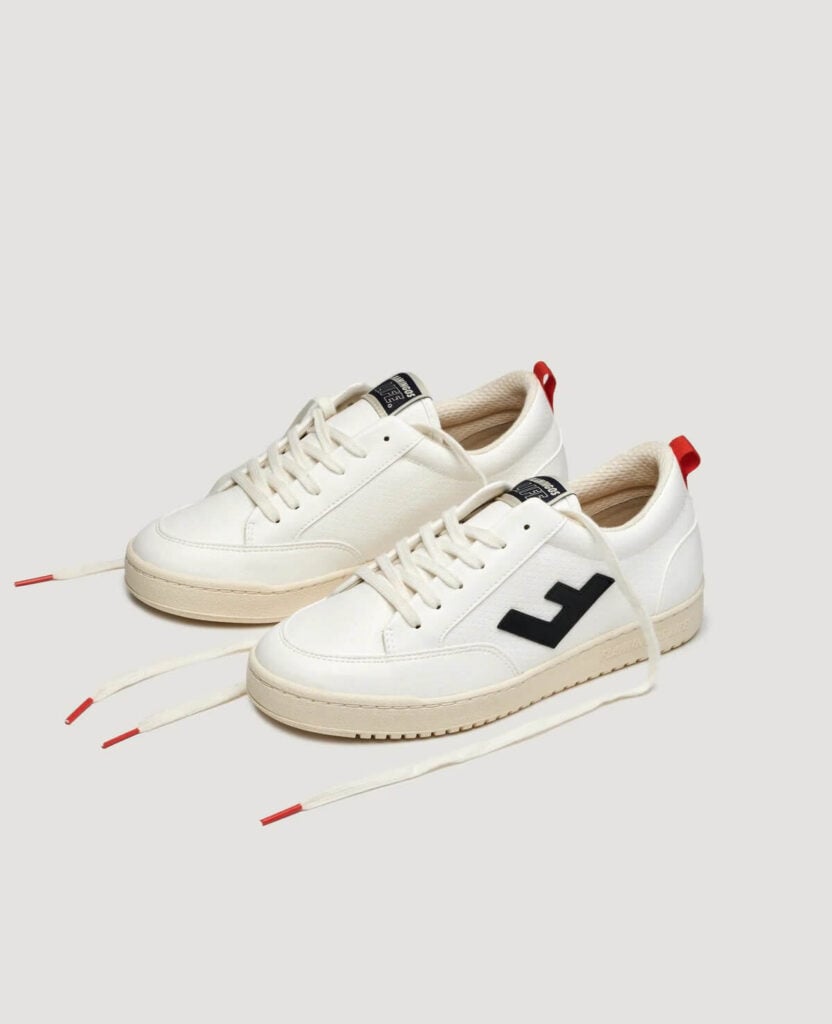
Quick verdict
Flamingos Life is best for vegan sneaker enthusiasts who want plant-based, retro-styled footwear made in Europe with innovative materials like corn waste leather and bamboo lining. The brand stands out for its radical transparency (BCOME platform tracking per product), local European manufacturing, and social projects tied to each collection. Caveat: labor practices lack a formal Code of Conduct, the product range is extremely narrow (sneakers only), and environmental certifications beyond PETA Vegan are limited.
Key info
- Headquarters
- Elche, Spain
- Founded
- 2015
- Product categories
- Shoes, Sneakers, Vegan
- Price range
- $$
- Key certifications
- PETA-Approved Vegan, OEKO-TEX, GOTS (organic cotton components)
Flamingos Life sustainability rating
Our ratings are based on a scale from 1 (We Avoid) to 5 (Excellent). How we rate
Rating breakdown
Uses innovative plant-based materials: corn waste leather (bio-based, proven more durable in bending tests), bamboo lining, organic cotton, natural rubber soles, and recycled PET. Holds OEKO-TEX and GOTS certifications for relevant components. The brand's ultimate goal is fully biodegradable sneakers.
All manufacturing in Elche, Spain and Portugal, EU countries with strong labor protections. Founders monitor conditions weekly. However, there is no formal Code of Conduct. No third-party labor certifications.
BCOME partnership provides detailed per-product environmental tracking, showing 80% less water use, 65% less CO2, and 61% less PO4 emissions versus conventional sneakers. Manufactures locally (within 40km of HQ). However, no formal emissions reduction targets, no published sustainability report, and no product take-back program.
Exceptionally transparent for its size through BCOME platform, disclosing detailed environmental impact data for each product. Shares specific manufacturing locations, material sources, and resource savings. However, lacking a Code of Conduct and formal labor audit results tempers the score.
Sneakers typically range from €90–€140 (~$100–$155). Comparable to Veja and slightly above Ethletic. The premium reflects European manufacturing, innovative plant-based materials, and social project donations. Fair value but not budget-friendly.
What they do well
- Innovative plant-based materials: corn waste leather (bio-based, outperforms animal leather in durability tests), bamboo lining, organic cotton, and natural rubber soles; working toward the goal of fully biodegradable sneakers
- Radical per-product transparency via BCOME: each product page shows detailed environmental impact data (water savings, CO2 reduction, PO4 emissions) compared to conventional footwear
- 100% European manufacturing within 40km of HQ: all production in family-run factories in Elche, Spain (a city with 40+ years of shoemaking heritage) and Portugal, minimizing transport emissions
- Social projects tied to every collection: €1 per pair donated to environmental causes; partnerships include water well construction in Uganda, reforestation in Madagascar/Mozambique, and ocean cleanup
- Fully vegan brand with PETA certification: no animal-derived materials used anywhere; every product is "Approved Vegan" by PETA
Room for improvement
- No formal Code of Conduct or third-party labor certification. While EU labor laws provide a baseline, the lack of a published Code of Conduct and independent factory audits is a significant gap.
- No circularity or end-of-life program, no take-back, repair, or recycling scheme exists. The brand has stated this is in development but has not launched anything yet.
About Flamingos Life
Flamingos Life was founded in 2015 by Carlos García Sánchez in Elche, Spain, a city renowned for its shoemaking tradition spanning over four decades. The brand was born from two convictions: that the fashion industry needed to confront its ecological crisis, and that animals should not be killed for footwear.
The brand's core innovation lies in plant-based material development. Its corn waste leather is a vegan, bio-based material made from corn processing residues, providing a durable alternative to animal leather. Bamboo provides the lining material, chosen for its rapid renewability. Natural rubber soles, organic cotton, and recycled PET round out the material palette.
All production takes place in small family-run workshops in Elche and Portugal, ensuring EU labor law compliance and enabling weekly monitoring. The brand partners with BCOME for per-product environmental impact tracking, revealing impressive metrics: 80% less water, 65% less CO2, and 61% less phosphate emissions compared to conventional footwear.
Each collection supports a specific environmental cause: the "Classic 70s" collection plants 5 trees per pair in Mozambique/Madagascar, while the "90s" collection funds water wells in Uganda. Pricing sits at €90–€140 (~$100–$155), comparable to Veja and other European sustainable sneaker brands.
Product highlights
Classic 70s Sneaker
Retro low-top in corn waste leather with natural rubber sole
~€100–€120
Hero product; each pair plants 5 trees in Madagascar/Mozambique; proven more durable than leather in bending tests
Roland V.10
Low-top sneaker with organic cotton upper and bamboo lining
~€90–€110
Made with organic GOTS-certified cotton and recycled PET; the brand's most affordable style
80s High-Top
High-top sneaker in corn waste leather with bamboo lining
~€110–€140
Funds water well construction in Uganda; retro basketball aesthetic in plant-based materials
Barefoot Sneaker
New silhouette designed for proprioception and natural spine alignment
~€110–€130
Latest innovation; combines the brand's plant-based materials with barefoot shoe design principles

![14 Best Vegan Sneakers for Cruelty-Free Feet [2026]](/images/blog/vegan-sneakers.webp)
![10 Best Sustainable Converse Alternatives: Shoes Like Converse [2026]](/images/blog/shoes-like-converse.webp)